
Feeding a growing global population without placing further strain on land, water and climate is one of agriculture’s defining challenges. Meeting it will take more than incremental efficiency gains – it calls for inputs that work with natural systems rather than against them. Microalgae biotechnology is increasingly part of that answer.
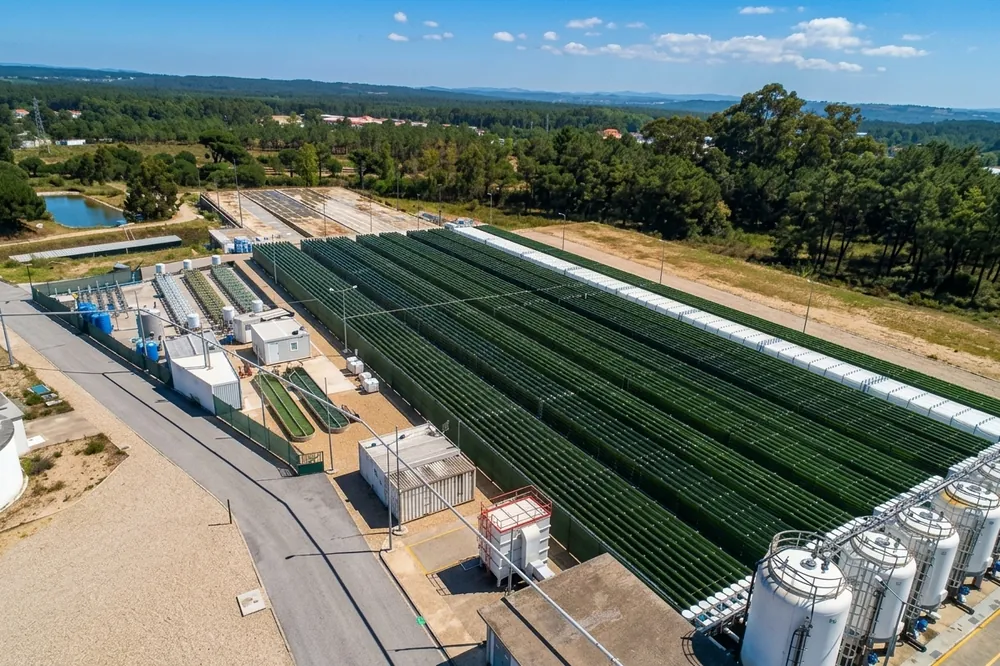
Microalgae were among the first photosynthetic organisms on Earth, and they remain remarkably efficient at converting sunlight, water and CO2 into biomass – far more efficient, per unit of land, than most terrestrial crops. Because they can be cultivated in engineered ponds, tubular photobioreactors or flat-panel systems on non-arable land, producing microalgae at industrial scale doesn’t compete with food crops for fertile soil.
That efficiency compounds when the biomass is converted into agricultural inputs. Microalgae-based biostimulants can reduce a farm’s reliance on synthetic fertilizers by improving how efficiently crops take up the nutrients already applied, while simultaneously helping soils sequester more organic carbon. Fewer synthetic inputs mean a smaller downstream footprint – less energy-intensive fertilizer manufacturing, less runoff into waterways, and healthier soil biology over time.
Production itself can be designed with sustainability in mind from the start. Facilities powered by solar energy, closed-loop water systems and circular approaches – such as using agricultural or industrial effluents as a growth medium – further shrink the carbon footprint of the biomass before it ever reaches a field.
Taken together, these characteristics position microalgae as a genuinely circular input: captured carbon and sunlight, converted into a product that helps crops grow more efficiently and soils regenerate over time. As the agricultural sector looks for ways to align productivity with genuine environmental stewardship, this kind of biotechnology offers a rare combination – meaningful impact at a scale that can actually move the needle.